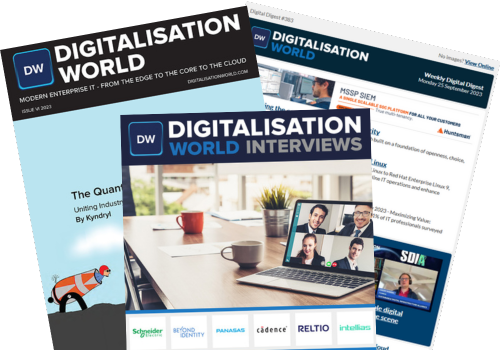
Digital Newsletter
Each week our editor Phil Alsop rounds up the most popular articles, videos and expert opinions. We compile this into a Digital Newsletter and send it straight to your inbox every week.
Digital Magazines
We'll let you know each time a new edition of Digitalisation World is released so that you're always kept up-to-date with the latest and greatest news and press releases.
Video Magazines
The Digitalisation World Video magazine contains the latest Zoom interviews with experts in the industry.
LANDesk Software, the global leader in delivering User-Oriented IT solutions for systems, security, mobility and ITSM management challenges, today revealed that 96% of service desks will use self-service facilities in the future to combat smaller team sizes.
In a research study by the Service Desk Institute (SDI), service desks reported over 50% fewer staff on their teams, compared to 2007 figures. According to the SDI’s study, 68% of service desks currently provide self-help solutions to end users, resulting in faster resolution time for IT incidents and increased availability for more complex or proactive activities. The study also determined that major barriers to successful self-support included out-of-date knowledge and lack of integration with support tools.
Service desks are also experimenting with alternative ways of allowing staff to contact them, including live chat (24%), Twitter (13%) and Facebook (6%). This experimentation may not only stem from shrinking headcounts, as more organisations open themselves up to innovative ways of working and trial working with different mobile devices, for example. The research revealed that over a third of organisations now support user-owned devices in the workplace, adding to the depth and breadth of their support roles and meaning that they have to find better, more innovative ways to cope with the increased volume of queries.
“Managing user-owned devices is a trend which is not going away,” says Andy Baldin, Vice President, EMEA. “With the proliferation of BYOX, CYOD, COPE and other approaches to hybrid enterprise/consumer IT in the workplace, service desks are increasingly being called on to support devices and applications they may not be familiar with. This inevitably places strain on teams and it is extremely encouraging to see high uptake of such innovative solutions by service desks, including experimenting with self-service and social media to provide the best service to their organisations.”
“Service desk teams have always been in tune with the needs of the wider workforce, but it is clear that they are responding to the changing environment in a responsible and innovative fashion,” says Tessa Troubridge, managing director, Service Desk Institute. “It is heartening to see that despite smaller team sizes, they are finding ways to cope with an ever-expanding remit through innovative use of technology.”